
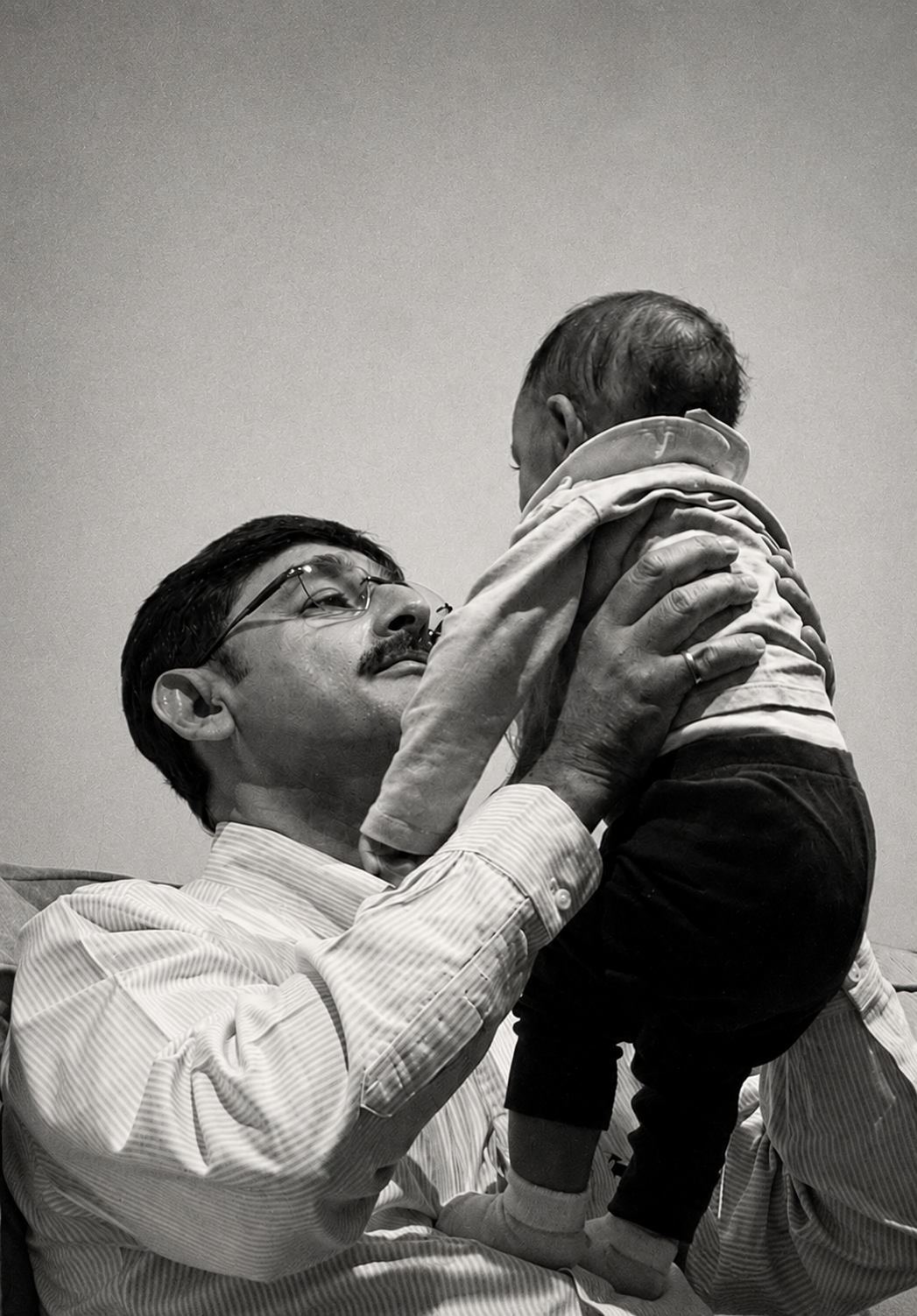
Three moments
that built this platform
The call that changed everything
I was in San Antonio on a business trip when I got the call.
It was May 2003, just days after my birthday. My father had fallen ill. By the time the words reached me across the phone line, the diagnosis was already terrifying: a terminal brain tumour. I cut the trip short, booked the first flight I could find, and came home.
In the weeks that followed, I did everything a son could do. Took him to the best hospitals in India. Consulted every specialist within reach. Pushed, arranged, and hoped with a ferocity never applied to anything before – not to business, not to anything.
There was one thing I wanted more than anything else. Not a cure, though I prayed for that too. I wanted to see him walk into his office one more time. Just once. To sit in his chair. To be himself, in the place where he had spent his life building something.
That didn’t happen.
Within two months, he was gone. He was sixty-nine years old.
And everything he knew went with him.
Not because he didn’t love us. Not because he hadn’t lived a full life worth remembering. But because none of us, not him, not me, not anyone in our family had ever stopped to think that there might come a day when his voice would simply no longer be there.
We assumed there would be more time.
I have thought about that every day since.
The phone calls COVID left behind
I remember the phone calls of April 2021.
Not one call. The thousands of them, playing out across India, in homes I never visited and families I never met. A phone ringing in a hospital corridor. A nurse’s tired voice. A family on the other end, unprepared. And then silence the kind that doesn’t fill again.
What broke so many of us during COVID was not just the scale of what we lost. It was the specific cruelty of how we lost it.
People were taken without warning. Rushed into isolation. Separated from the people they loved most, at the moment they needed them most.
And in that separation, moments were left incomplete.
The father who was admitted on a Tuesday and was gone by Friday, without ever telling his children where he kept the insurance papers. The mother who didn’t get to say, one last time, that she was proud. The husband who had been meaning to record a message for his wife’s birthday and simply ran out of time.
I knew exactly what those families were feeling. I had felt it twenty three years earlier, in a hospital in India, watching my father slip away before I could capture a single word of what I wished he had left me.
What would I want my sons to have?
I I’m a business man and have spent over forty years building companies, signing agreements, and thinking on balance sheets. I am not, by nature, someone who speaks easily about grief or fear.
But when I began building The Plan Beyond, I found myself sitting with something I had been avoiding for a long time.
What would I want my sons to have, if I were gone tomorrow?
Not my shares. Not my properties. Those are important, yes — and they deserve their own careful planning. But what I kept coming back to was something else entirely. A conversation I never finished with Rishav. Something I wanted Abhinav to know about why I made certain choices. The things I have never said to Radhu, not because I don’t feel them, but because I am a man of my generation and we were not taught to say them out loud.
My father never said those things either. Not because he didn’t feel them. But because no one ever handed him a way to do it.